
Abhiyana
Writer and podcaster
Erotic literature and “Textos Putos”
“The practice of love is the most powerful antidote to the politics of domination”
bell hooks
erōtikós is a documentary that expands the mythologies of Eros and explores love, sexuality, and eroticism across clinical, aesthetic, and political dimensions.
Led by a team of women investigating the electricity that moves, ignites, and empowers us, the project creates new erotic narratives through conversations with artists and researchers answering the questions “what is your name?” and “what calls you (or calls to you)?”, guided by the intimate listening of psychologist and project director Maíra Scombatti.
The research unfolds in podcasts (with more than 250,000 plays and a place in Spotify’s Top 18 in 2024), a book published by Editora Patuá, and a feature film with release planned for this year.
“Eroticism is one of the foundations of knowledge, as indispensable as poetry.”
Anaïs Nin
Writer and podcaster
Erotic literature and “Textos Putos”

Psychologist and couples & family therapist
Listening to love and eroticism in clinical practice

Poet, writer, and cultural producer
From Audre Lorde to the State of Libido
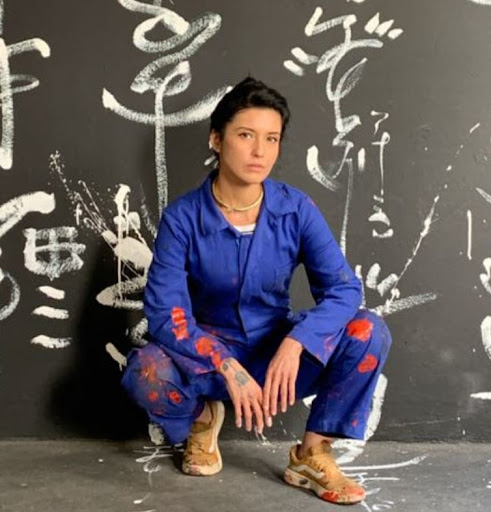
Visual artist
Sensitive calligraphy and Japanese erotic art

Psychologist, researcher, and president of CRP — RJ
Transitions, Yoruba mythologies, and eroticism in non-binary clinical practice

Dance and performance artist
The pelvis and erotic movement

University professor and researcher
Erotic literature, excess, and the underside

Performer, video artist, and poetic terrorist
Sexuality and eroticism in disabled bodies

Visual artist
Sensitive calligraphy and Japanese erotic art

Psychologist and researcher
Love, sexuality, and eroticism in decolonized relationships and Guarani cosmogony
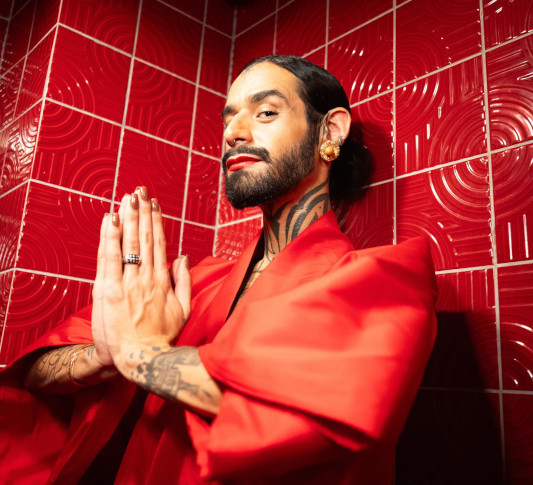
Travesti artist, curator of Love Cabaret
Eroticism, contrast, and awareness

Writer, speaker, and podcaster
Do sex and eroticism have an expiration date?
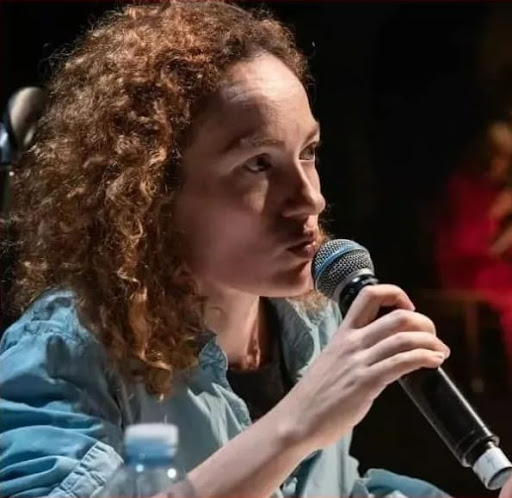
Playwright, director, and researcher
Dramaturgy, pornography, and eroticism
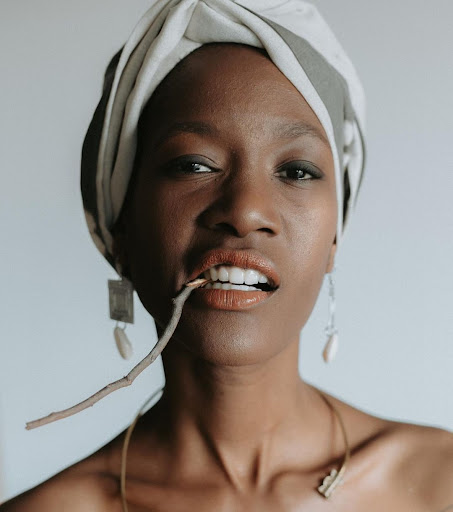
Singer, art educator, and cultural activist
Voice, love, eroticism, and Mozambican narratives

Psychoanalyst, professor, and researcher
Subversions of the erotic

Psychologist and psychoanalyst
Sexuality and eroticism in disabled bodies
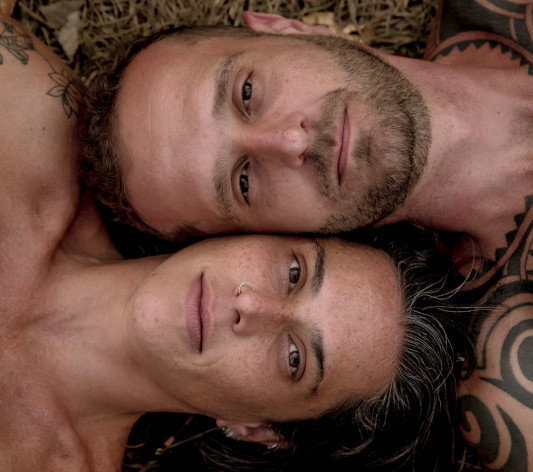
Founders of Intimidade Consciente
Intimacy, awareness, and living relationship

Philosopher, professor, and researcher
Love and eroticism in African, Greek, and Asian mythologies

Philosopher, professor, poet, and psychoanalyst
Eroticism in the poetry and philosophy of Georges Bataille
What is your name? And what calls you (or calls to you)?
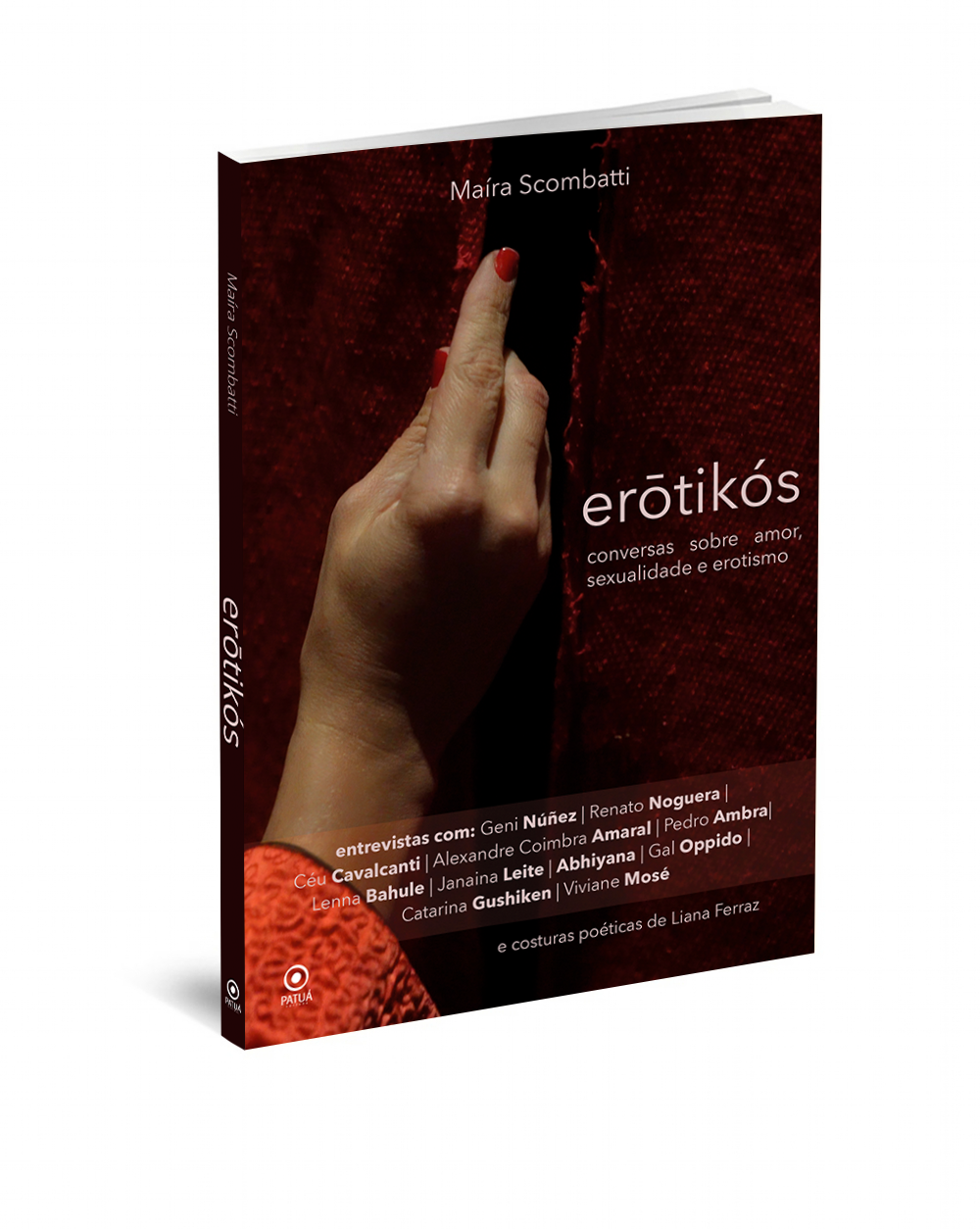
It was from that inquiry, and from the urgency of life in times of isolation, that the documentary erōtikós was born. Preserving the warmth of orality and the intimacy of the encounter, the book materializes the ten interviews that gave rise to the film and the podcast of the same name, interwoven with sensitive poetic stitches. Challenging Eurocentric views, the work invites us to expand the cosmogonies of Eros and to rethink love, sexuality, and eroticism at their clinical, aesthetic, and political crossroads.
Organized by Maíra Scombatti · poetic stitches by Liana Ferraz · Editora Patuá
“If there is a possible invitation, it is this: bring your whole body into contact with what this book presents, keep your listening open, summon the senses, and let yourself be smeared.”
— Liana Ferraz
“I love the enthusiasm of people talking about things they love”
Author unknown

Direction & Research
@maira_scombattiMaíra Scombatti is a researcher working across multiple languages and a psychotherapist for individuals, couples, and groups. Born in France in 1979, she has been Brazilian since 1980, with accents from the country’s northeast, south, and southeast. Mother of Theo and Ian, she began working with the arts and earned degrees in journalism, education, and psychology. Between 2020 and 2022, amid grief and trauma work during the pandemic, she developed the project “Letters to Eros in Times of Phobos”, opening the first paths toward the erōtikós documentary.

Director of Photography
@gutagalliGuta Galli is an interdisciplinary artist working with performance, video, photography, and painting, always using the body as an axis in her practice. Mother of Nico, she holds a postgraduate degree in photography and a master’s in Arts focused on new genres in contemporary art. Her research studies intersections of gender, power, race, and violence.

Editing
@laraaufrancA FAAP film graduate, Lara Aufranc has worked as an editor of fiction and documentary films for 15 years. A singer and songwriter with three released albums, she has performed across Brazil, Portugal, and Spain. She narrates audiobooks, paints, and directs her own music videos.
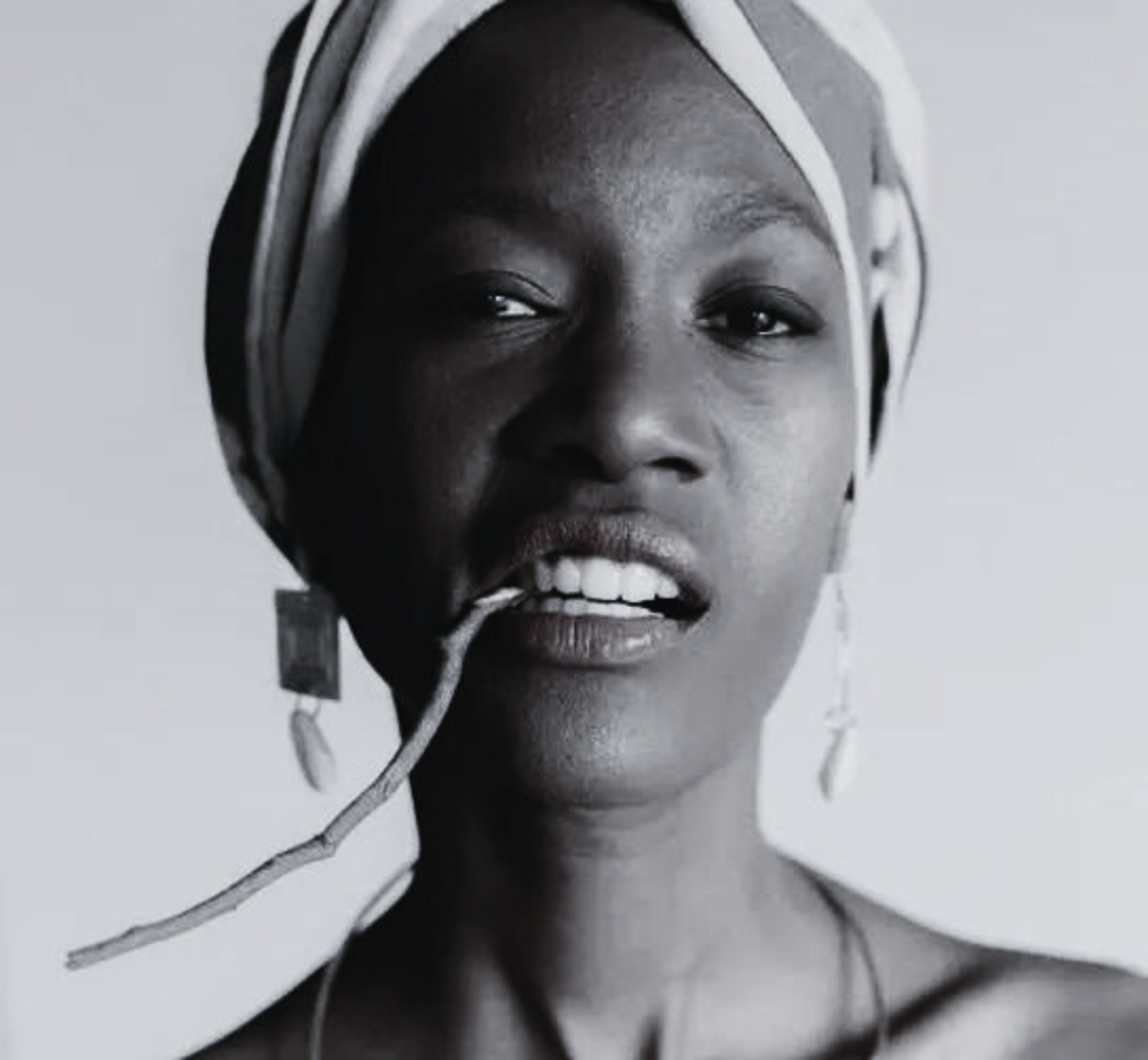
Musical Direction
@lennabahuleLenna Bahule is a singer, multi-artist, cultural activist, and mother of Phantima. Born in Mozambique, she researches Afro cultures and social movements in her country and other African diasporas. Her first authorial album (Nômade) was listed among the 100 best albums produced in Brazil.

Podcast Editing
@marianapleaoMariana Leão holds a degree in audiovisual media from Centro Universitário Senac and audio training from IAV — Institute of Audio and Video. Since 2015 she has specialized in sound post-production, editing, sound design, and mixing for podcasts and audiovisual works. In 2020 she won Best Sound for the medium-length film “A Luz Incidiu Sobre Nós Como a Pálida Noite” at Brazil New Visions Film Fest. She is a recurring editor on the Mamilos podcast and collaborates on editing and sound for Rádio Novelo podcasts.

Production & social media design
@rizzi.izzirVisual artist, DJ, and dancer. Rizzi Tani founded the collective @jardim.sonoro and the RitualistiKa performance: an invitation to surrender to dance and to the erotic, poetic experience of the body in movement. Mother of Elohim and self-taught in digital design, she also teaches Indian classical dance in the Odissi style, with studies in Brazil and India. She facilitates experiences and gatherings with women, researching sensuality as a tool for self-inquiry and wellbeing.

Production
@daicalistoDaiane Calisto is a multidisciplinary artist working across visual arts; she is a producer, philosophy student, researcher of ancestral technologies, and mother of João.
The research unfolds in podcasts with more than 250,000 plays and a place in Spotify’s Top 18 in 2024. In each episode, guests answer the questions “what is your name?” and “what calls you (or calls to you)?”.
Initiatives that complement the project

Talk with Maíra Scombatti, Abhiyana, and Pedro Ambra
Livraria Patuscada — Sep 30, 2026, 7–10pm

With Maíra Scombatti · Patuá Editora
28th São Paulo International Book Biennial — Booth K45
Sep 13, 2026, 1pm · Anhembi

Book signing and panel
Casa Gueto · Paraty/RJ — Jul 24, 2026, 4pm and 8pm

With Maíra Scombatti
Casa Gueto · FLIP — Jul 24, 2026, 4pm

With Liana Ferraz
Casa Gueto · FLIP — Jul 24, 2026, 4pm

With Maíra Scombatti, Janaína Leite, and Paula Valéria Andrade
Eroticism, intimacy, and freedom in contemporary literature
Casa Gueto · FLIP — Jul 24, 2026, 8pm
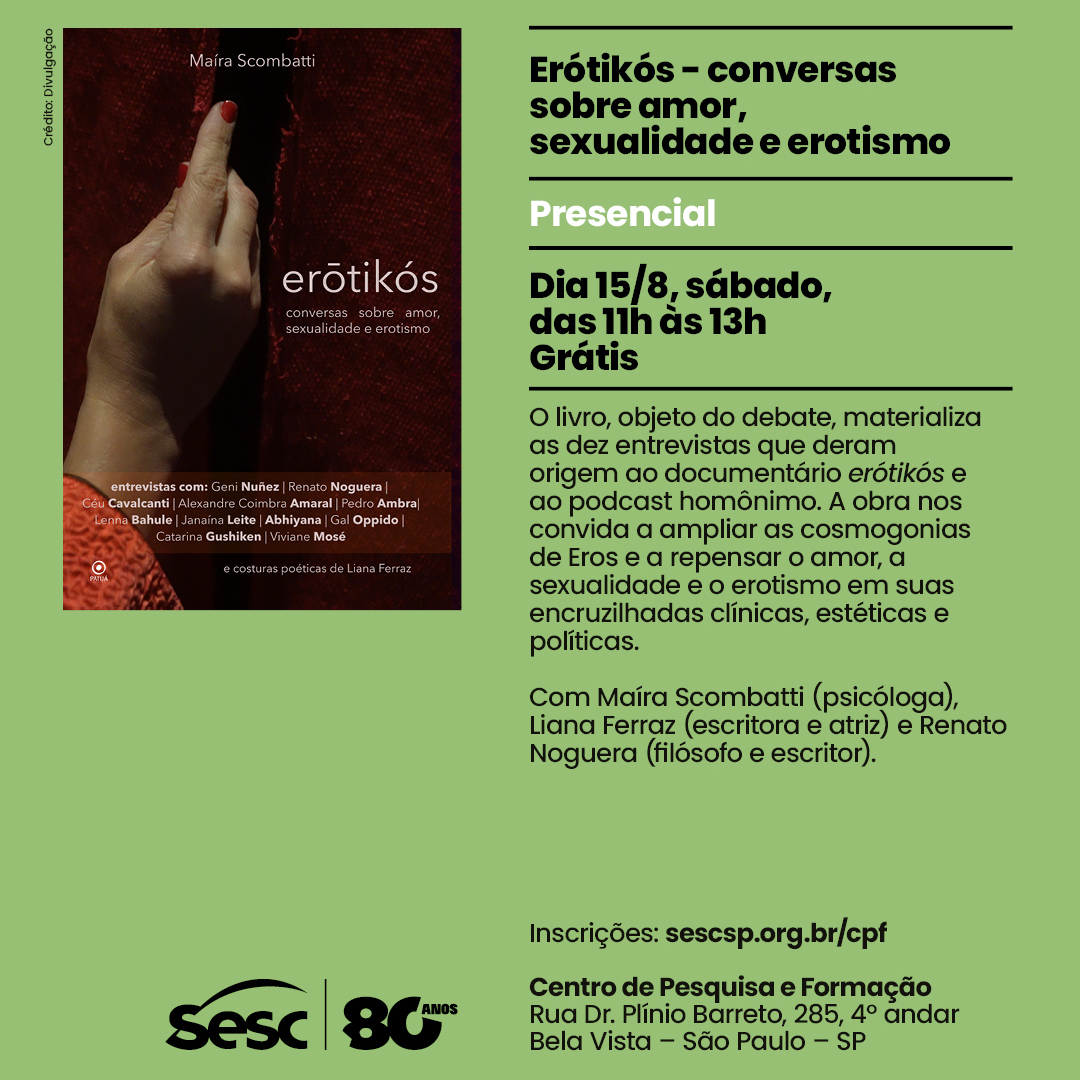
Conversations on love, sexuality, and eroticism
With Maíra Scombatti, Liana Ferraz, and Renato Noguera
Sesc Research and Training Center — Aug 15, 2026, 11am–1pm · Free

With Maíra Scombatti, Liana Ferraz, and Renato Noguera
Talks & Lectures · Literature
Sesc CPF — Aug 15, 2026, 11am–1pm · In person · Free
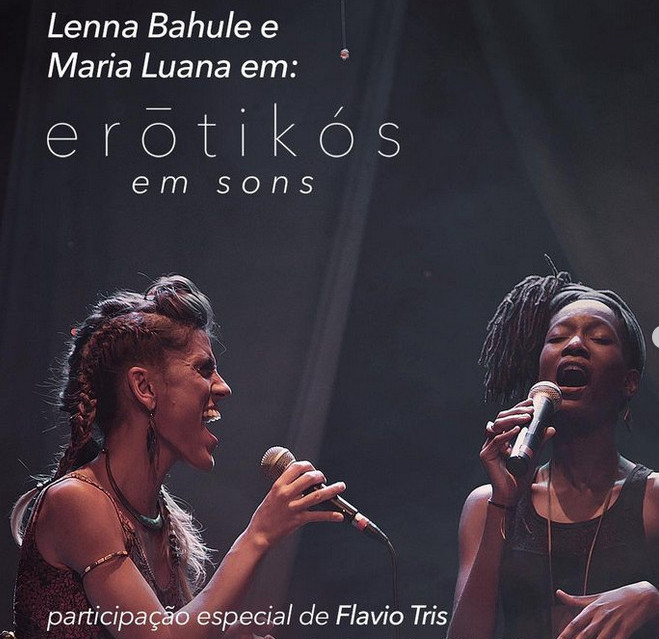
With Lenna Bahule and Maria Luana
Special guest Flávio Tris
Redoma Bixiga — Nov 23, 2023

Event with Maíra Scombatti
Online — Nov 24, 2023
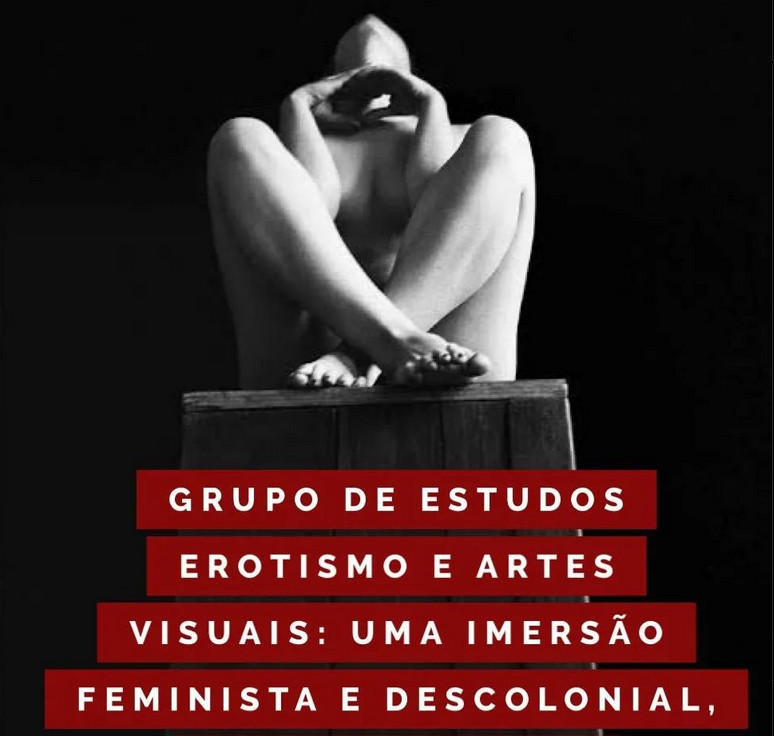
Study group with Guta Galli
Online — Apr to Jun 2024
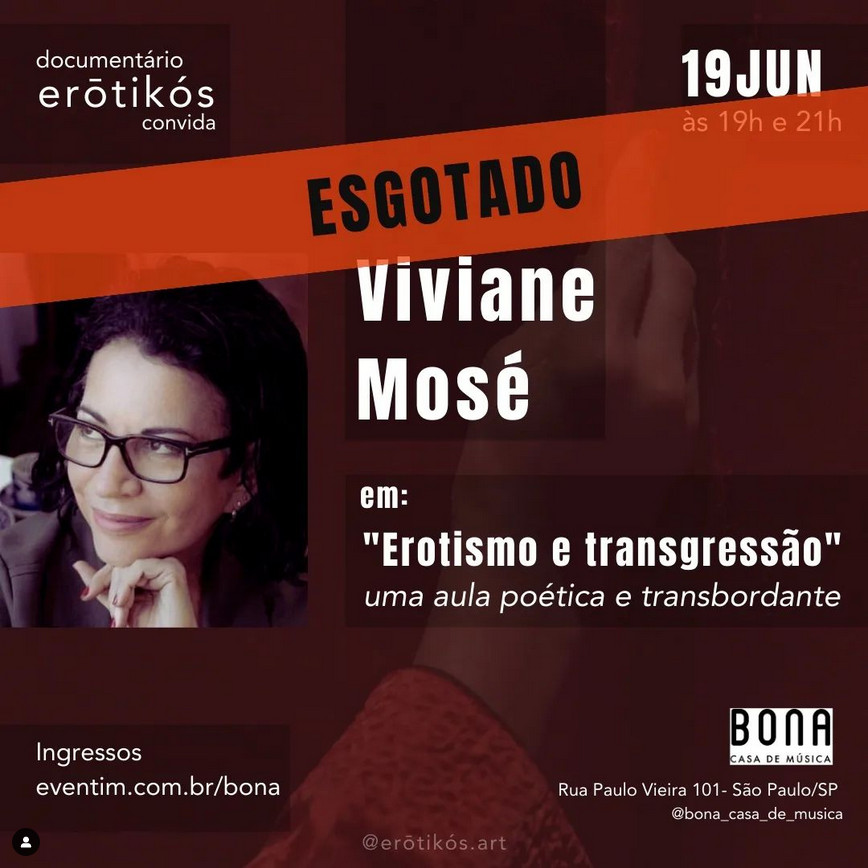
Poetic session with Viviane Mosé
BONA Casa de Música SP — 19/06/24
Some of the messages received publicly
Click the image to enlarge
“Eroticism is the poetry of the body just as poetry is the eroticism of language”
Octavio Paz
The dictionary tells us of an adjective related to eroticism: what tends to provoke love or sexual desire, and what addresses and describes sexual love. Its etymology is Greek (erōtikós) and relates to the mythological figure of Eros.
Also described as the god of love, in Greek narratives Eros may be a child of Aphrodite (Venus) or one of the primordial gods born from Chaos. He may be one of the forces that envelop the cosmos and is favored by the Olympians when they no longer wish to submit to Ananke (necessity). He may be Psyche’s companion on her journeys, or the Roman Cupid who strikes new lovers. In Platonic thought, he may be the child of Poros (resource) and Penia (poverty). His origins are not singular, yet his forces intensify encounter, fusion, bond, and creation.
Although Greco-Roman mythologies are the most widespread in the West, images of Eros can be accessed through many narratives and cosmogonies.
As a force of adhesion, this aligns with Chinese thought in hexagram 30 of the I Ching (Book of Changes): The Clinging (Adhering), represented by fire, speaks of life as bond and of how everything living must adhere to something.
“There is a place to arrive
Viviane Mosé
A state, a posture
Where everything is completed.
Yes, there is a place, a joy
Where there are no more words
Only hands that meet
Without quarrel. There is a point
Of fusion, where everything embraces
And there is no more cold
In the soul, only the warmth
Of the sacred and of love
Adhering to what separates”
In Yoruba mythology, Eros is not easily mapped onto a single orixá, yet erotic potency is visible in many images: in the beginnings of Exu and Pomba Gira, in Oxum’s beauty, and in Xangô’s fire.
In Dagara culture, to love is to listen — an invitation to the path of intimacy. In Guarani narratives, the moon god Djatchy mobilizes love and also invites us to rest. We can still expand our understandings of Eros by researching different cosmogonies and representations.
“To love is to want to learn, the Greeks teach us. To that learning we must add another, fundamental one, this time from Afro-Indigenous cultures: to love is not an individual emotion, but a collective one”
Renato Noguera
Alongside this diversity of images, when we speak of the eroticism of fusion we also deal with the suspension of limits, the suspension of morality, and the intensification of bodies. The erotic also threatens the illusion of control and is therefore constantly repressed in dogmatic, patriarchal, colonizing, and colonized societies. There is no structure for governing life, no exercise of power, that does not pass through the government of desires.
When that government is oppressive, it draws on many discourses to consolidate itself and colonize desiring bodies. Devitalized bodies are more easily dominated and depressed; reducing access to eroticism facilitates any domination. The opposite can be lived in the awakening of a political body that may be empowered through erotic freedom.
“The erotic is that core within me. When released from its intense, constricting shell, it flows through my life, coloring it with the kind of energy that expands, sensitizes, and strengthens my whole experience. [...] Erotic wisdom empowers us”.
Audre Lorde
At the same time, alongside relations with life force and drive, eroticism also moves through our death drives. The very suspension of limits for fusion can flirt with little deaths (petite mort describes the orgasmic experience in French) and also reveal our lacks, especially when mixed with romanticism.
Breaking limits that once defined or outlined a body can touch human anguish, yet it can equally open space for the new and for what lies beyond our navel.
“Who is the true subject of most love poems? Not the beloved. It is that hole”
Anne Carson
Another constant reflection in research on eroticism concerns the distinction between what is erotic and what is pornographic. That boundary will never be peaceful, and all manner of moral and aesthetic complication arises when separating one concept from the other. What is erotic for one may be pornographic for another — and we might ask what truly matters: whether erotic or pornographic production (in books, films, music, or any visual art) serves the empowerment of bodies or colonialist, patriarchal logic.
Finally (or to begin), erotic experience is also tied to processes of inquiry. Like researcher Anne Carson, “I would like to understand why these two activities — falling in love and coming to know — make me feel so alive. There is a kind of electricity in them. They resemble nothing else, yet they resemble each other. How?”.
erōtikós sets out to investigate that electricity that moves and ignites us. To reflect on eroticism as a source of resistance, social transformation, and transgression against what oppresses and disempowers us. To expand the cosmogonies of Eros in order to decolonize our bodies and, in Geni Núñez’s words, reforest our imagination and our desires.
May we have spaces for research and experimentation — and may our discoveries be poetic as well.


Everything we read during the initial research + works discussed by interviewees from both seasons